
BPPV vs General Dizziness What’s the Difference
BPPV vs General Dizziness What’s the Difference
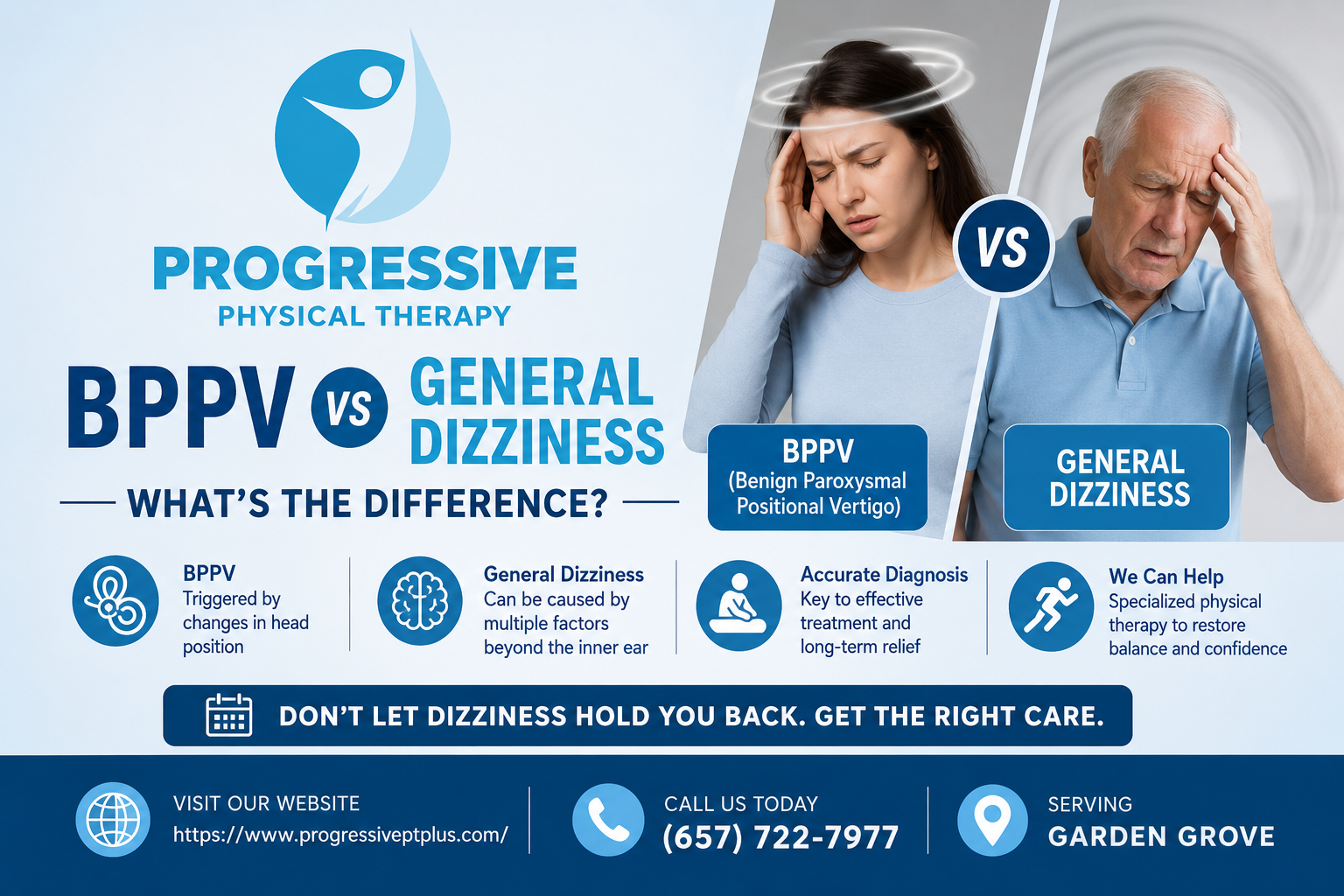
Many people use the term "dizziness" to describe a variety of symptoms, including feeling lightheaded, unsteady, or as though the room is spinning. However, not all dizziness has the same cause.
One common condition associated with dizziness is Benign Paroxysmal Positional Vertigo (BPPV). Understanding the difference between BPPV and general dizziness can help individuals seek appropriate care and treatment.
What Is BPPV?
BPPV is one of the most common causes of vertigo. It occurs when tiny calcium crystals within the inner ear become displaced and move into areas where they can disrupt normal balance signals.
People with BPPV often experience:
- Brief episodes of spinning sensations
- Symptoms triggered by head movement
- Dizziness when rolling in bed
- Vertigo when looking up or bending down
Episodes typically last seconds rather than hours.
What Is General Dizziness?
General dizziness is a broader term that may describe several different sensations. Unlike BPPV, it does not always involve a spinning feeling.
Individuals experiencing general dizziness may report:
- Lightheadedness
- Feeling faint
- Unsteadiness while walking
- Difficulty maintaining balance
- A sensation of floating or swaying
These symptoms can result from numerous causes, including dehydration, medication side effects, blood pressure changes, neurological conditions, or vestibular disorders.
Key Differences between BPPV and General Dizziness
While both conditions affect balance, there are several important distinctions.
Symptom Pattern
BPPV typically causes short episodes of vertigo triggered by specific head movements. General dizziness may occur more continuously or without a clear trigger.
Sensation Experienced
People with BPPV often describe a spinning sensation. Those with general dizziness may feel unsteady, lightheaded, or off-balance without experiencing true vertigo.
Underlying Cause
BPPV originates within the inner ear. General dizziness may have a wide range of potential causes involving multiple body systems.
When Should You Seek Evaluation?
Persistent dizziness, balance problems, or recurring vertigo should be evaluated by a healthcare professional.
An assessment can help determine:
- Whether symptoms are related to BPPV
- If another vestibular condition is present
- Whether balance impairments require rehabilitation
- The most appropriate treatment approach
Early evaluation may help individuals better understand their symptoms and improve confidence during daily activities.
How Physical Therapy Can Help
Vestibular physical therapy is designed to address balance disorders and dizziness-related conditions. Treatment plans may include:
- Balance training exercises
- Vestibular rehabilitation technique
- Gaze stabilization exercises
- Movement retraining
- Education on symptom management
Physical therapists, along with other healthcare professionals, can often identify BPPV through a quick positional test that evaluates how specific head and body movements affect symptoms. This assessment helps determine whether displaced inner ear crystals may be contributing to episodes of vertigo.
For individuals with BPPV, specific repositioning maneuvers may be used to help restore normal inner ear function. These maneuvers are often highly effective, with many patients experiencing significant symptom improvement after just a few treatment sessions.
Conclusion
Although BPPV and general dizziness are often discussed together, they are not the same condition. BPPV typically causes brief episodes of spinning triggered by head movement, while general dizziness can involve a variety of sensations and underlying causes. Understanding the difference is an important step toward receiving the appropriate evaluation and treatment for long-term balance and mobility goals.