Making the Transition from Physical Therapy Back to Sports
Making the Transition from Physical Therapy Back to Sports
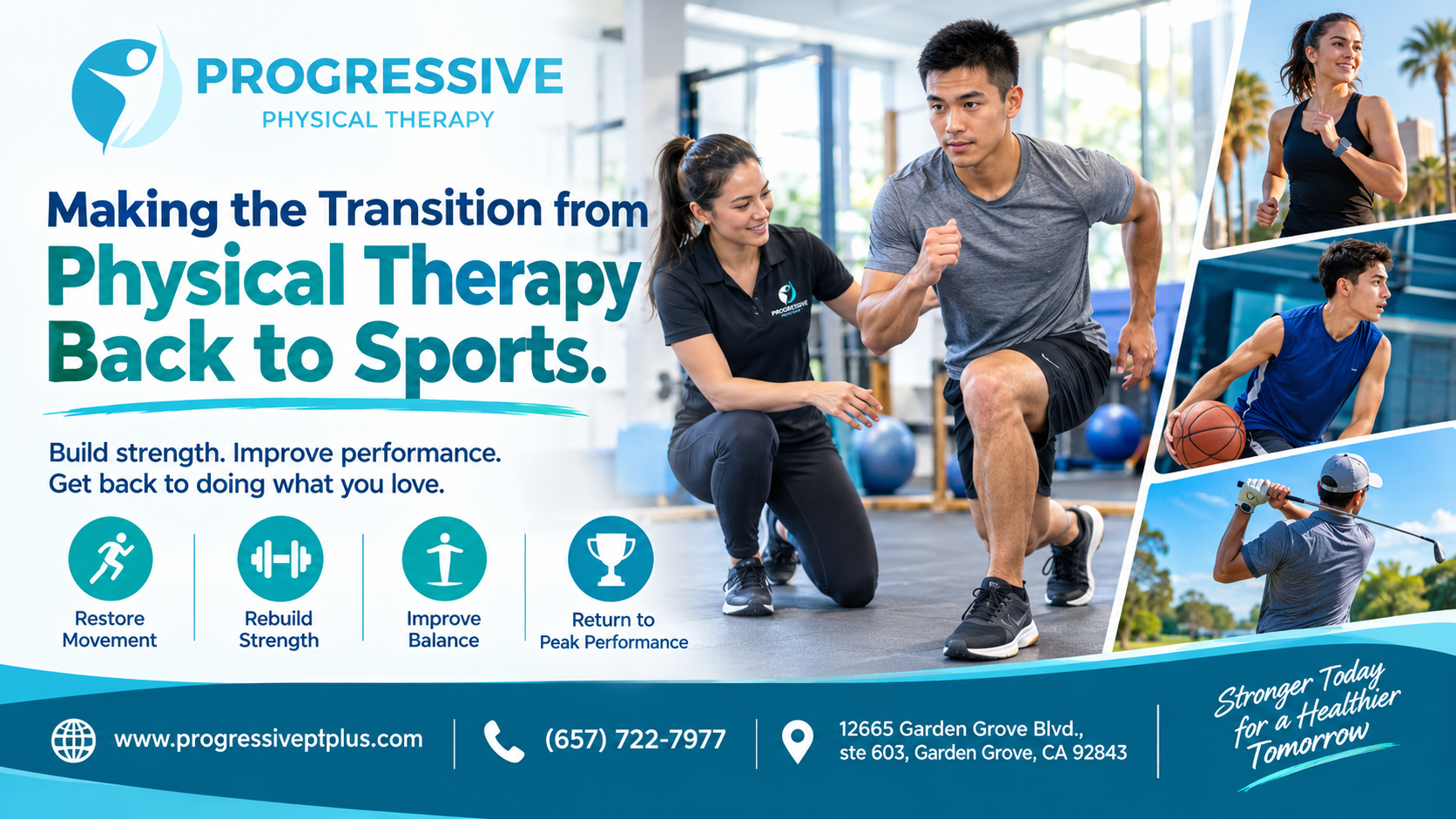
Returning to sports after an injury is about more than simply feeling better. An athlete may have less pain and better movement but still need to rebuild strength, control, endurance, and confidence before returning to full sports activity.
This is where return-to-sport testing can help. It gives physical therapists a structured way to assess how an athlete moves and responds to physical demands that are similar to their sport. The goal is to understand current abilities, identify areas that still need work, and help guide a gradual return to activity.
What Is Return-to-Sport Testing?
Return-to-sport testing is a series of physical assessments performed during the later stages of rehabilitation. The specific tests depend on the injury, sport, position, age, and individual goals.
A physical therapist may look at several areas, including:
- Strength and muscular endurance
- Balance and coordination
- Joint mobility
- Jumping and landing mechanics
- Agility and change-of-direction control
- Sport-specific movement
- Ability to tolerate increasing physical demands and training volume
Testing is not simply about getting a passing score. It provides useful information about how an athlete performs and whether certain weaknesses or movement limitations remain.
Why Feeling Better Is Not Always Enough
Pain can improve before strength and movement control has fully returned. An athlete may feel comfortable walking or performing basic exercises but struggle with sprinting, jumping, cutting, or repeated movements required during sports.
This difference is important when planning a return to competition. A physical therapist may gradually increase exercise intensity while monitoring movement quality and the body's response to training.
If restricted joint movement is affecting performance, Joint Mobilization Treatment in Garden Grove may be incorporated when clinically appropriate. Improving joint mobility can be one part of a broader rehabilitation program when a therapist identifies mobility limitations.
What Does the Testing Process Look Like?
Return-to-sport testing usually builds on the progress already made during physical therapy. The therapist first considers the athlete's injury history, current symptoms, sport, and rehabilitation goals.
The athlete may then perform movements that place progressively greater demands on the injured area. Depending on the sport, this can include single-leg tasks, jumping, landing, running, balance activities, agility drills, or repeated movements.
The therapist observes factors such as strength, control, symmetry, coordination, and movement quality. Results can then help determine which areas are ready for progression and which may need additional training.
Returning to Sports Should Be a Gradual Process
Going directly from rehabilitation exercises to full competition may place demands on the body that it has not yet practiced. A gradual progression allows an athlete to rebuild tolerance for the movements, speed, intensity, and repetition involved in their sport.
A return-to-sport plan may progress through stages such as:
- Basic strength and movement exercises
- More demanding functional exercises
- Running, jumping, or agility activities
- Sport-specific drills
- Controlled practice
- Gradual return to full participation
The timeline varies from person to person. The type and severity of the injury, rehabilitation progress, sport demands, and response to increasing activity all matter.
How Sports Injury Rehab Supports the Transition
Sports Injury Rehab in Garden Grove can address the physical demands that athletes need to manage as they move closer to their sport. Rehabilitation may include strengthening, mobility work, balance training, coordination exercises, movement retraining, and sport-specific conditioning.
A physical therapist can also help identify areas that may require continued attention after an athlete returns to practice. Returning to sports is not necessarily the end of rehabilitation. Continued strength and conditioning may remain important for maintaining performance and supporting long-term movement health.
Building Confidence before Returning to Competition
Physical recovery is only one part of returning to sports. Some athletes may feel hesitant about putting full force through a previously injured area or performing a movement that caused pain before.
Progressive exposure to sport-specific movements can help an athlete become more comfortable with these demands. Open communication with the physical therapist is important if pain, swelling, instability, or unusual symptoms occur during rehabilitation.
Return-to-sport testing provides information that can support clinical decision-making, but there is no single test that can guarantee an athlete will avoid another injury. The results should be considered alongside the athlete's overall recovery, clinical presentation, and sport-specific requirements.
Taking the Next Step toward Returning to Sports
Returning to sports after an injury takes more than reaching the end of a treatment plan. It requires rebuilding the physical abilities needed for the activities an athlete wants to perform.
Return-to-sport testing helps physical therapists examine strength, movement quality, balance, mobility, and sport-specific performance. With a structured rehabilitation plan and gradual progression, athletes can work toward returning to the activities they enjoy with a clearer understanding of their current abilities and remaining needs.